
Fluid Extractors, Oil Extractor Pumps, and Fluid Transfer Pumps: A Complete Guide to Smarter Fluid Handling
Whether you are maintaining a family car, running a small workshop, or managing a fleet of heavy equipment, the way you remove and move fluids can make the difference between a clean job and a costly mess. Fluid extractors, oil extractor pumps, and fluid transfer pumps are three closely related tools that simplify this work. They reduce spill risk, save time, and help you handle everything from engine oil to coolant, hydraulic fluid, and even water. This guide explains what each tool does, how they differ, and how to choose the right one for your needs.
Why Fluid Handling Tools Matter
Fluid changes are routine, but they are rarely convenient. Drain plugs can be difficult to reach, used oil must be captured safely, and transferring liquids between containers often leads to drips, spills, and wasted product. A good extractor or transfer pump solves these problems by creating controlled suction or pressure. Instead of crawling under a vehicle or tipping a heavy container, you can move fluid through a hose directly into the right receptacle.
The benefits are practical: cleaner work areas, faster service times, less fluid waste, and better safety. For professionals, these tools also improve productivity and reduce cleanup costs. For home users, they make maintenance less intimidating and more manageable.
What Is a Fluid Extractor?
A fluid extractor is a device designed to pull liquids out of a reservoir, engine, transmission, or other enclosed system using vacuum pressure. Most manual extractors use a hand pump to create vacuum inside a sealed container. Once the vacuum is established, fluid travels up a dipstick tube or extraction hose and collects in the tank. Pneumatic and electric models work on the same principle but use air or motor power to generate suction.
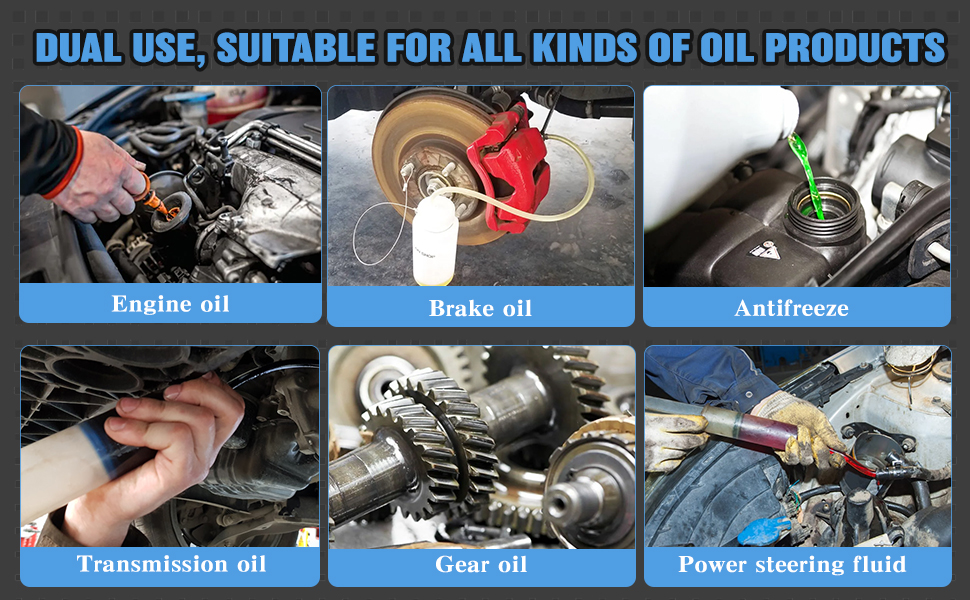
Fluid extractors are especially useful when draining by gravity is impractical. They can remove oil from engines with top-mounted filters, extract transmission fluid from sealed units, and pull coolant or brake fluid from hard-to-reach areas. Because the fluid goes directly into a contained tank, the risk of spills is greatly reduced.
When selecting a fluid extractor, consider capacity, hose diameter, vacuum strength, and material compatibility. A 6- to 10-liter extractor is often enough for passenger vehicles, while larger workshops may prefer 20 liters or more. Make sure the hoses and seals are resistant to the fluids you plan to handle.
Oil Extractor Pump: The Mechanic’s Best Friend
An oil extractor pump is a specialized fluid extractor built for engine oil and similar viscous liquids. It is one of the most popular tools for top-side oil changes. Instead of removing the drain plug, you insert the extraction tube into the dipstick tube and pump up vacuum. The used oil is drawn out and stored in the extractor tank, ready for recycling.
This method is especially helpful for vehicles with underbody panels, low ground clearance, or drain plugs that are awkward to reach. It is also valuable for marine engines, generators, lawn equipment, and other machines where draining by gravity is difficult. Many oil extractor pumps include multiple tube sizes, allowing them to fit different dipstick openings and fluid systems.
For best results, warm the oil slightly before extraction. Warm oil flows more freely, but it should never be hot enough to damage the pump or cause burns. Also, avoid overfilling the tank and check that all connections are secure before pumping. A well-maintained oil extractor can last for years and make routine oil changes far less messy.
Fluid Transfer Pump: Beyond Oil Changes
A fluid transfer pump is a broader category of equipment used to move liquids from one container to another. It may use manual pumping, compressed air, or an electric motor. Unlike an extractor, which is often used to remove fluid from a closed system, a transfer pump is frequently used for filling, emptying, or circulating fluids.
Common applications include transferring diesel, gasoline, coolant, hydraulic oil, transmission fluid, water, and mild chemicals. Transfer pumps are available in rotary, diaphragm, piston, and drum-pump designs. Each type has strengths: rotary pumps are simple and affordable, diaphragm pumps handle thicker or more sensitive fluids, and electric pumps are ideal for high-volume tasks.
Before buying a transfer pump, confirm that its wetted materials are compatible with your fluid. A pump that works well for water may not be suitable for gasoline or solvents. Also check the flow rate, hose length, and power source. For portable use, a manual or battery-powered pump may be best; for fixed workshop use, a pneumatic or electric model can improve efficiency.
Key Features to Compare
| Tool | Primary Use | Best For |
|---|---|---|
| Fluid extractor | Vacuum removal from reservoirs and systems | Oil, transmission fluid, coolant, brake fluid |
| Oil extractor pump | Top-side engine oil removal | Routine oil changes, marine and small engines |
| Fluid transfer pump | Moving fluid between containers | Diesel, water, hydraulic oil, drums and tanks |
Choosing the Right Tool for the Job
Start by identifying the fluid and the system. If you need to remove oil through a dipstick tube, an oil extractor pump is the most direct choice. If you need a versatile tool for several types of fluid removal, a fluid extractor with multiple adapters is a smart investment. If your task involves filling tanks, emptying drums, or moving liquid across a workspace, a fluid transfer pump will be more practical.
Also think about volume and frequency. Occasional home use may only require a manual pump. Daily professional use justifies a larger, more durable model with faster pumping and easier cleaning. Look for clear markings, secure lids, chemical-resistant hoses, and simple disassembly. These details make a bigger difference than a long list of extra features.
Maintenance and Safety Tips
- Flush after use: Rinse hoses and tanks according to the manufacturer’s instructions, especially after handling different fluids.
- Store properly: Keep hoses straight and containers clean to prevent cracking or contamination.
- Check seals: Worn O-rings and loose fittings reduce suction and can cause leaks.
- Use the right container: Collect used oil and chemicals in approved containers for recycling or disposal.
- Work in a ventilated area: Fuel, solvents, and used oil can release harmful vapors.
Good fluid handling is not just about speed—it is about control. The right extractor or transfer pump keeps fluids contained, protects your workspace, and makes maintenance safer for everyone involved.
Final Thoughts
Fluid extractors, oil extractor pumps, and fluid transfer pumps overlap in purpose but shine in different situations. A fluid extractor gives you controlled vacuum removal, an oil extractor pump simplifies top-side oil changes, and a fluid transfer pump moves liquids efficiently between containers. By matching the tool to the task, you can reduce spills, save time, and handle routine maintenance with confidence. Whether you are a weekend DIYer or a full-time technician, investing in the right fluid-handling equipment pays off every time you open a drain plug—or decide you do not need to.