
Illuminating Comfort: Why Ceiling Fan Lights, Drone Ceiling Fans, and Remote-Controlled Ceiling Fans Are Transforming Home Cooling
Ceiling fans have come a long way from the simple wooden-blade fixtures of decades past. Today’s models combine air movement, lighting, smart controls, and even futuristic design language. Whether you are upgrading a bedroom, outfitting a living room, or searching for a statement piece, three categories stand out: the ceiling fan light, the drone ceiling fan, and the ceiling fan with remote. Each brings a different kind of value to a home, and together they show how far residential cooling has evolved.
Ceiling Fan Light: More Than a Bright Idea
A ceiling fan light solves a familiar problem: ceiling fans move air, but they do not always illuminate a room. By integrating a light kit directly into the fan, manufacturers create a single fixture that handles both comfort and visibility. This is especially useful in rooms where ceiling space is limited or where a separate pendant light would feel crowded.
Modern fan lights are not afterthoughts. Many use dimmable LED arrays, adjustable color temperatures, and diffusers that soften glare. In a home office, a warm-white setting can make evening work feel less clinical. In a kitchen, a brighter cool-white setting helps with chopping and cleaning. The best designs blend the light source into the fan’s silhouette so the fixture looks intentional rather than bolted together.
- Energy efficiency: LED fan lights consume far less power than traditional bulbs.
- Space savings: One fixture instead of two keeps the ceiling visually quiet.
- Layered lighting: Pair with floor lamps or sconces for a flexible lighting scheme.
Drone Ceiling Fan: The Future of Air Movement?
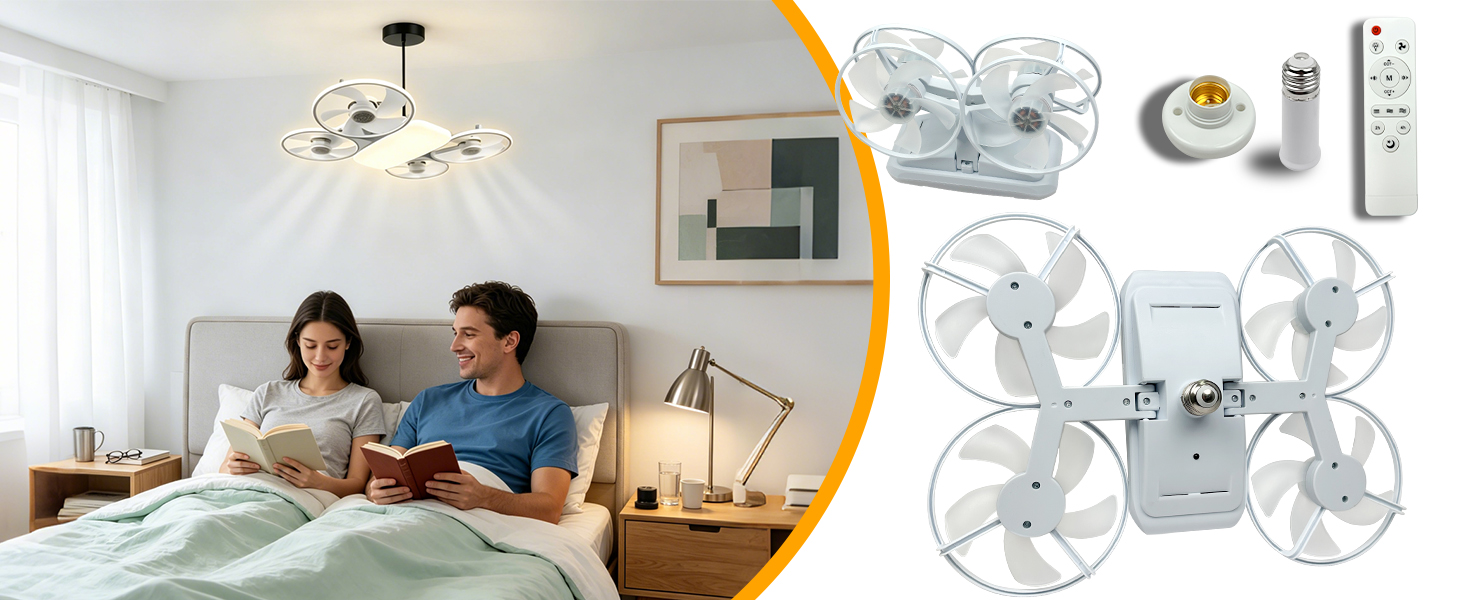
The drone ceiling fan is the most eye-catching development in the category. Inspired by drone propellers and aerodynamic curves, these fans often feature enclosed blades, compact housings, and a distinctly tech-forward look. Some models use multiple small rotors rather than one large blade set, which can produce a softer, more diffuse airflow.
“A drone ceiling fan is not just about cooling. It is about turning a functional appliance into a design statement.”
That statement matters because ceiling fans are visible every day. A drone-style fan can suit modern, minimalist, or industrial interiors where a traditional five-blade fan would feel out of place. The enclosed blade design may also be safer in homes with curious children or tall furniture, and it can be easier to clean because dust collects on fewer exposed surfaces.
Of course, style should not come at the expense of performance. Before buying a drone ceiling fan, check airflow ratings, noise levels, and whether the fan is rated for damp or humid locations. A beautiful fan that rattles at high speed will quickly lose its appeal.
Ceiling Fan with Remote: Convenience at Your Fingertips
A ceiling fan with remote is one of those upgrades that feels minor until you live with it. Instead of stretching for a pull chain or installing a wall switch with limited functions, you can change speed, reverse the blade direction, dim the light, and set timers from across the room. For high ceilings, the benefit is obvious. For bedrooms, it is transformative: you can adjust the fan without getting out of bed.
Remote-controlled fans are also helpful in rooms with multiple seating areas. If the fan is mounted above a dining table but the sofa sits nearby, a remote lets you tune the airflow without rewiring the room. Many remotes now pair with smart home systems, allowing voice control or scheduling through a phone app.
- Check compatibility: Confirm the remote works with the fan’s receiver and light kit.
- Consider wall-mount cradles: A dedicated holder prevents the remote from disappearing.
- Look for memory functions: Better remotes remember your last speed and light settings.
Bringing It All Together
The ideal ceiling fan often combines these features. A ceiling fan with remote that also includes an integrated ceiling fan light gives you control and illumination in one package. Add the sculptural appeal of a drone ceiling fan, and the fixture becomes part of the room’s design rather than an appliance you tolerate.
Still, the best choice depends on the space. A large living room may need a high-CFM fan with a bright dimmable light. A compact bedroom may benefit more from quiet operation and a remote with a sleep timer. A design-forward den might call for a drone-style fan that invites conversation before it ever moves a single blade of air.
Quick Buying Checklist
- Room size: Match blade span and airflow to square footage.
- Light output: Check lumens and color temperature if you choose a fan light.
- Control: Decide whether a remote, wall switch, or smart app fits your routine.
- Noise: Read reviews for motor hum and blade wobble.
- Style: A drone ceiling fan can anchor a modern room, but it should complement the ceiling height and decor.
Ceiling fans are no longer one-note products. With integrated lighting, remote convenience, and bold drone-inspired designs, today’s fans can cool a room, brighten a corner, and elevate the look of a ceiling all at once. The right model is the one that fits your space, your habits, and your sense of style—without making you reach for a pull chain in the dark.